Posts

Mock Interview Reflection

How do you feel the interview went overall? Overall, I think that the interview went well. I felt prepared in the sense that I had thought out answers to basic interview questions, and I did not think that I sounded "scripted."  How did you prepare for the interview? To prepare for the interview, I reviewed my notes from an interview I had just a couple months ago for a mental health fieldwork. For this interview I had reflected on my strengths, weaknesses, valuable lessons from my graduate education, and experiences in the field. In addition, I read through AOTA's "Best Answers to the 11 Most Difficult Interview Questions" which helped to prompt my thought process about responses to potential questions. The AOTA article can be found here:  https://www.aota.org/Education-Careers/Students/Pulse/Archive/job-search/interview.aspx   What went differently than you expected? The interview went much more quickly than I expected. I also felt more comfortable than I...

OT 633 Guest Lecture: Aging & Sexual Health

Image
Today we had the privilege of having Jennifer Valli, a certified sex therapist, come speak to our class about Aging & Sexual Health: Intimacy over a lifetime. Seeing as sexual activity is an activity of daily living, it is within the scope of occupational therapy's practice. This lecture was beneficial to us because it will increase our comfort level and confidence when discussing/addressing the variety of concerns our clients may come to us with regarding their sexuality. A major take away from the lecture is that the model of sexuality differs between men and women. The Tri-phasic Sexual Model includes desire (thoughts & fantasy), arousal (blood flow), and orgasm (contraction). Men's Tri-phasic Sexual Model will most likely this: Desire → Arousal → Orgasm  Whereas for women who are older or have been in a long term relationship (greater than 2 years), their sexual response is more likely to look like this: Neutral feeling & cognitive thought → Arousal ...

OT 633: Driving & Community Mobility Guest Lecturer

I found the guest lecture on driving and adaptive vehicles to be very informative. The biggest takeaway for me was the freedom driving can bring to someone who has had limited community mobility. While on the other hand, some individuals are driving when they should not be, which endangers other community members. The guest lecturer emphasized the importance of keeping the roads safe by recommending individuals who do not have the proper skill set (vision, attention, cognition, etc) get a medical hold on their license. I have had the pleasure of driving an adapted van before which allowed a pre-teen girl to participate in social gatherings which she had previously been limited by. The van allowed for her to go up a ramp on the side door and lock her wheelchair into the middle seat area with a row of seats behind her free for friends! For example, I drove her to go bowling with 3 of her best friends, and it was evident that this social participation meant a lot to her. Finally, it i...

OT 630: Glyphs Reflection

Image
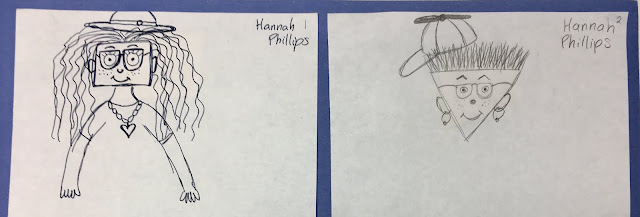
The drawings above are the results of a glyph drawing exercise "A Self-Portrait of a Leader," in which I followed prompts about the face shape, eyes, eyelashes, eyebrows, nose shape, skin and so on as they correlated to leadership qualities. The picture on the left was completed in my first semester of OT school and the picture on the right was just completed in my last semester of courses in OT school. The first noticeable difference between my drawings is the face shape: square head = leadership stems from nurture over nature, triangle head = leadership is an inborn trait. I am not surprised that this quality changed between pictures because I believe that leadership stems from a pretty even balance of nature and nurture, so I am glad it is represented in both! The second difference is that my first picture has eyelashes and the second does not. This simply means that I could not recall 5 of the themes from the Flifton StrengthsFinder assessment and need to freshen up ...

OT 633: Nutrition Guest Lecture

What were the key takeaway points from the guest lecture today? Describe two occupational therapy interventions based on the topic. Each intervention should address a different type of client: individual, group, or population.   Today our guest lecturer shared with us the importance of nutrition and exercise in the aging process and healing the body from injury/illness. My biggest take-away from this lecture is the importance of early intervention with nutrition, especially in acute care hospital stays. This is an area that is currently lacking because dietitians sometimes don’t even get to see a patient until the 4 th  day of their stay, and by this time the client has already lost a significant amount of their muscle mass. She explained that nutrition must be as much of a priority for patients as therapy and medication is. This entails consultations upon admission and plans for discharge. If proper nutrition is not addressed, the patient’s medication and therapy...

Level 1C Fieldwork Debriefing

Image

Neuro Note #4: A List of Interesting & Important Resources!

In no particular order, I have provided some podcasts, videos, articles, and social media accounts for learning more about people and conditions with which occupational therapists may work! I chose to make this list for my final Neuro Note because I couldn't pick just one condition or one individual to share- there are so many interesting resources! Enjoy 1) Getting Curios with Jonathan Van Ness Podcast, Episode: What Are Strokes? with Dr. Lina Nih Description: Jonathan Van Ness is a hairdresser, podcast host, and TV personality who stars in "Queer Eye" an amazing make over documentary series on Netflix. On his podcast, Jonathan has quests for 30 minutes each week to answer questions that he is curious about. The episodes range from " What's Going on in the Middle East Right Now?" to " How Can We Be Less Rude to Bees?". In the episode "What Are Strokes ?" Dr. Lina Nih discusses her research as a Post Doc at UCLA in which she studies ...

Memphis Rolling Grizzlies

Image
Our Neurological Aspects of Occupational Performance class had the opportunity to attend a Memphis Rollin' Grizzlies practice, and it was so impressive! I admire so much the dedication and intensity that the players had throughout their scrimmage. Occasionally, a player would get tipped or rolled over in their wheelchair and it was amazing how they could use their upper body strength (sometimes along with the support of other players) to get right back up. The players explained that you need to be a part of the chair for your safety and that you can really feel the difference when you're in a chair that was made for you vs someone else. I learned that the chairs designed for wheelchair basketball range from $3,000-$5,000 and they are not covered by insurance. During this experience, I learned the most by talking to the coach and asking endless questions. When I asked if the players injure their fingers regularly, he explained that most of the players grab the whole wheel o...

Media Project: Remembering the RouTEEn

Image
In my Neurological Aspects of Occupational Performance course we were assigned one household object and a client scenario for a Media Project. I was assigned "golf tees" and a woman named Barbara who is experiencing an exasperation of her Multiple Sclerosis. Barbara is 64, retired, volunteers as the co-leader at her local MS support group, enjoys sewing and doing crafts. Due to a significant decline in her function, Barbara is being seen by an occupational therapist with plans of going home in 4-5 days. Barbara has assistance from her husband and son when it comes to activities of daily living that are too challenging for her. She hopes to increase her independence and safety in her activities of daily living and instrumental activities of daily living, and she has expressed concern about her memory and fatigue interfering with her "getting back to what she was doing." Making the product Materials used: golf tees, paint, printer paper & tape for lab...

Neuro Note 3: The Fundamentals of Caring

Image
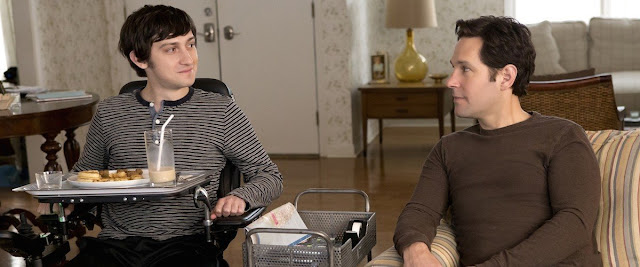
"Caregiving is not just about feeding, clothing, and cleaning. It is also about understanding how to navigate a complicated relationship between those who give care and those who are in need of it." This is the first line of the movie The Fundamentals of Caring. The movie is based on the book "The Revised Fundamentals of Caring" by Jonathan Evison and can be watched on Netflix. I chose to watch this movie because I had heard great things about it, and I was curious about the title. The movie is about a teenage boy, Trevor, who has muscular dystrophy and his caregiver, Ben. I highly recommend this movie, so I am not going to give away the plot line. However, some key things stood out to me in the movie. Trevor and Ben get along really well which is great for the two of them. However, at one point they get into a fight and Trevor's mom finds out. Trevor's mom pulls Ben aside and explains that she's so glad they they get along well, but she can't...

Conceptual Model of Occupational Therapy

Image
References Ameri can Occupational Therapy Association. (2014). Occupational therapy practice framework: Domain and process (3rd ed.).  American Journal of Occupational Therapy, 68 (Suppl. 1), S1– S48.  http://dx.doi.org/10.5014/ajot.2014.682006     O’Brien, J. C. & Hussey, S. M. (2017).  Introduction to occupational therapy  (5 th  ed.).   St. Louis, MO: Mosby, Inc.   ISBN: 9780323444484  

Inside the O'Briens

Image
Reading Inside the O’Briens by Lisa Genova has been extremely beneficial to my learning process in Neurological Aspects of Occupational Performance. It has given me an insight to the impact that a diagnosis may have on an individual’s relationships. It is important and interesting to learn about the symptoms and treatments of each neurological disorder. However, as occupational therapists it is essential to think beyond just symptoms and treatments because we use a holistic, client-centered approach. Inside the O’Briens is a good reminder of all the “behind the scenes” emotions and conversations that unfold when an individual receives a diagnosis such as Huntington’s disease. While the story of the O’Briens is fictional, it is realistic and unfolds in a way that makes the reader think about how this would affect any family. The conversations that took place in this story gave me a deeper understanding of Huntington’s Disease, the process of being tested for the inherited ge...